

WCAG-EM 2.0 News: Define the Care Product Under Review
2026-11-03
WCAG-EM 2.0 News: Define the Care Product Under Review
Which digital product does an accessibility report actually evaluate? That question becomes important when an eldercare robot is offered with a resident interface, a staff portal, and supporting documents. The 2026 WCAG Evaluation Methodology 2.0 publication gives procurers a current source for framing the question. It describes a process for evaluating digital products against WCAG 2; it does not turn an unspecified robot service into an approved or usable system.
A Group Note with an evaluation purpose
The published WCAG-EM 2.0 document is dated July 23, 2026 and identified as a W3C Group Note. Its process covers defining scope, exploring the product, selecting a representative sample, evaluating that sample, and reporting findings. The publication supplies methodology guidance, rather than a new set of WCAG success criteria.
Keep that publication status beside the title in a procurement brief. A source can be useful without being misrepresented as a certification of the offered equipment. The current article reads the published material and carries out no accessibility assessment or care-service evaluation.
The WAI overview explains its applicability to digital products including websites, mobile applications, and kiosks. That helps a buyer ask which interfaces belong in an actual review. It does not identify the interfaces in a particular robot delivery.
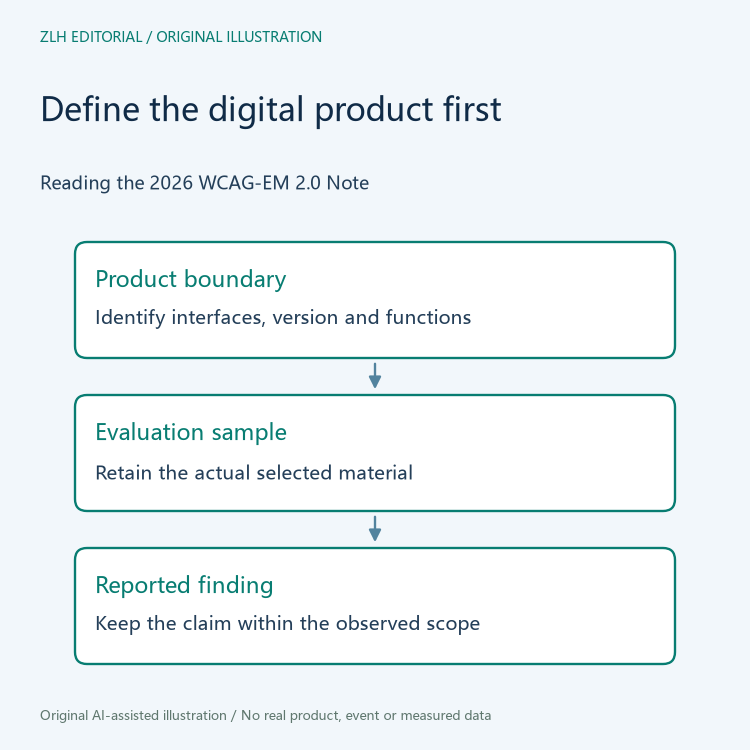
Start with the product boundary the report names
A supplier may demonstrate a staff screen while a resident interacts with a different interface. The procurement record should ask which product, version, and functions the report concerns. Do not assume that the most visible demonstration screen represents every interface involved in the offered service.
The boundary also affects supporting material. A user guide, a mobile application, and a browser portal may have different owners or release histories. The responsible supplier should explain which objects were included and which remain outside the evaluation, instead of leaving the buyer to infer coverage from a shared logo.
This is a question about report scope, not a demand to invent a comprehensive test retrospectively. A limited report can still provide useful findings when its limits are clear. The buyer should be able to understand what question the report was designed to answer.
A representative sample needs a traceable relationship
The methodology’s sample-based process should not be rewritten as proof that every part of an entire service was examined. The published document discusses the relationship between evaluation and conformance claims. A receiver needs to retain that distinction when reading a summary written for a purchasing decision.
Ask how the selected material relates to the product boundary and its relevant functions. A list of familiar page titles is not a complete explanation of selection. The report owner should identify the actual sample and the basis for interpreting its findings.
If a later release changes the product, the earlier report keeps its original scope. An unchanged product name does not make a past sample a record of the newer interface. A procurement note should preserve that chronology rather than silently extend a favorable finding.
Keep conformance findings and care-service suitability distinct
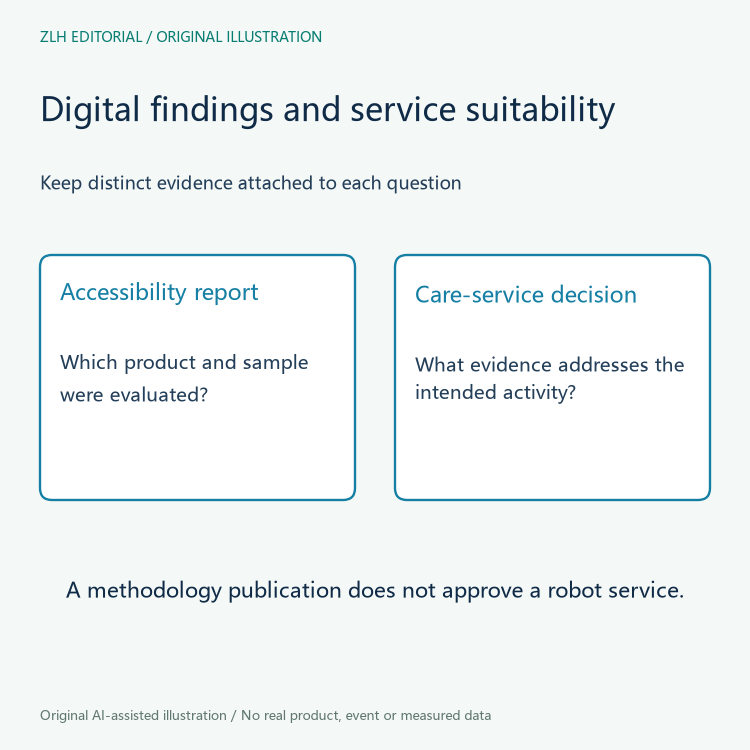
A digital accessibility finding can inform a procurement discussion without answering every question about an eldercare service. Actual users, intended activities, staffing arrangements, and physical interactions need the appropriate evidence. This article supplies no clinical conclusion, care outcome, or physical-robot usability finding.
The buyer should also ask how unresolved accessibility findings are handled in the offered delivery. An issue described in a report, a proposed correction, and an observed correction are different records. The supplier’s explanation should identify which stage has actually occurred.
A purchasing team should name the person responsible for answering a scope question. An interface developer, a report author, and a service provider may contribute different material. Their answers should remain attributable rather than be combined into a single assurance whose author cannot explain which product it covers. This also gives the next reviewer a concrete route for resolving an omitted interface.
Do not fill missing evidence with an idealized resident scenario. If a later authorized study involves users, its methods and observations should be reported on their own terms. A methodology illustration cannot stand in for that study or imply that participants were consulted.
Use the publication to sharpen the next enquiry
The practical question is which digital product and sample the supplier’s report covers, and what purchasing claim those findings can support. A clear answer helps a buyer evaluate the supplied material without expanding it into a blanket approval of the service.
Related reading appears in our care-robot digital access section and the article directory. Both original conceptual illustrations contain no real resident information, test participants, evaluated interface, compliance certificate, or completed service assessment.


